
Insulation Company in Costa Mesa, CA
Blown in insulation solves a specific Costa Mesa problem: homes built for 1950s and 60s coastal living that now leak conditioned air through thin walls and unsealed attic floors. We’re Stratford Insulation, a dedicated insulation contractor working across 92626, 92627, and 92628, and we match the material to the problem rather than pushing one system on every house. The marine layer, salt air, and stucco-over-2×4 construction here mean moisture control matters as much as R-value. Call (844) 643-2736 for a free estimate.
Why Costa Mesa Homes Are Different
Costa Mesa’s insulation challenges start with the ocean. The coastal marine layer and onshore breeze off the Santa Ana River corridor keep morning humidity high, and that moisture finds its way into attics and wall cavities. In 92626 and 92627 especially, we regularly see condensation staining at ceiling perimeters and rusted staples on old batt facings. Homes here need vapor-permeable or faced assemblies that dry toward the interior, not just more R-value stacked on top of trapped moisture.
The housing stock compounds this. Costa Mesa has little pre-war housing. The bulk is 1950s-60s post-war tracts around the Westside and Mesa del Mar, plus 1970s-80s stucco-and-wood-frame two-story homes and newer townhomes near South Coast Metro. Many of those older homes still have original R-11 or R-13 batt in 2×4 walls, vaulted ceilings, and exposed rafter cavities that make adding insulation trickier than in a standard attic. Salt-laden air corrodes foil facings and staples over time, so what looks like failed insulation is often a moisture-management issue first.
On the Westside specifically, the 1950s single-wall and 2×4 stucco tracts sit close to the ocean-influenced dew point. We see the same failure mode block after block: condensation at the ceiling edge, rusted fasteners, and batt that has slumped away from the top plate. Fixing that properly means air-sealing before adding insulation, and choosing a material that can dry if it gets damp.
Our Main Costa Mesa Services
Most Costa Mesa homeowners come to us for one of two jobs: attic insulation that addresses the moisture and heat-transfer realities of coastal construction, or spray foam that air-seals and insulates in a single pass. Here’s what each involves here.
Attic Insulation in Costa Mesa
Attic insulation in Costa Mesa starts with inspecting what’s already up there, because the original R-11 batts in 1950s-era Westside homes and the blown material in 1970s two-story stucco houses fail differently. We check for rusted staples, moisture staining, and gaps at top plates, then recommend either new batts, blown-in loose fill, or a hybrid depending on the rafter configuration and whether the attic floor is accessible. Vaulted ceilings and exposed rafter cavities are common here, so the right approach varies house to house. See our dedicated page for full detail.
Attic Insulation in Costa Mesa
Spray Foam Insulation in Costa Mesa
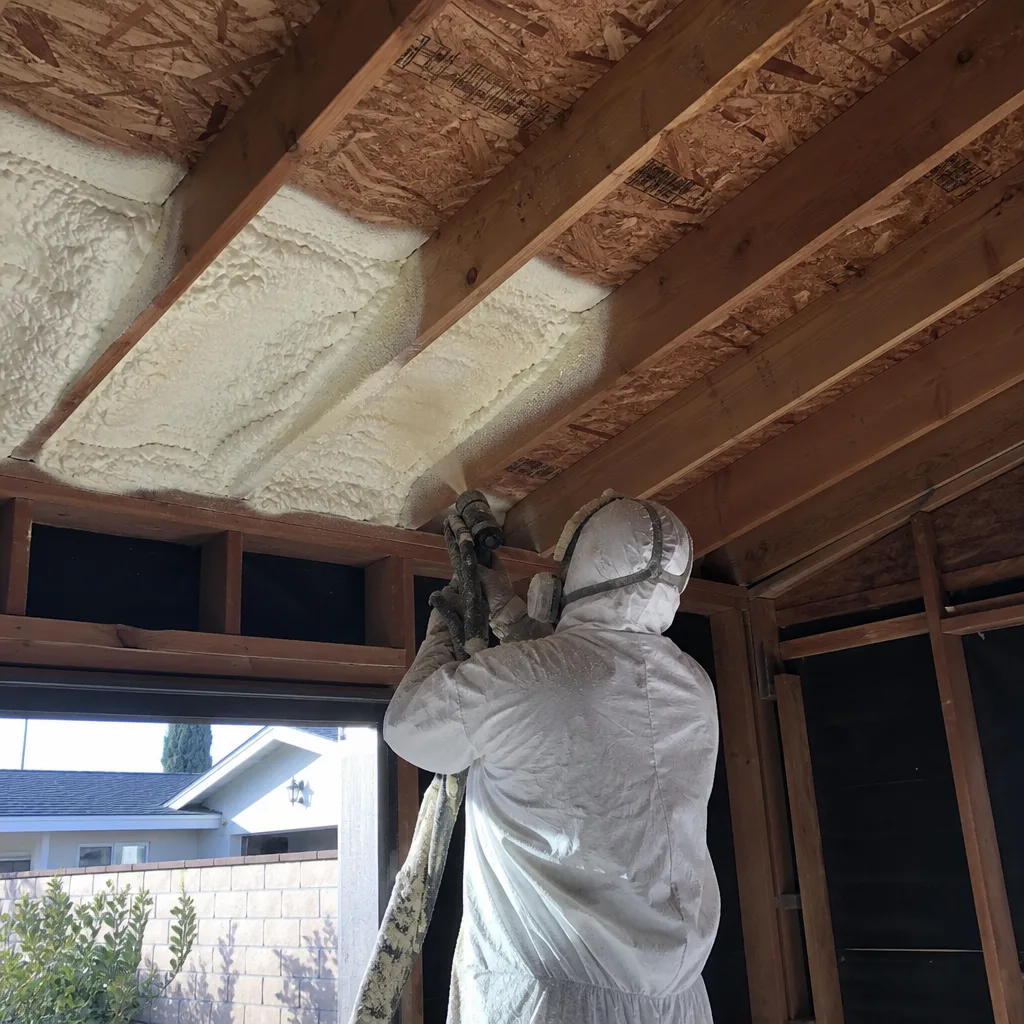
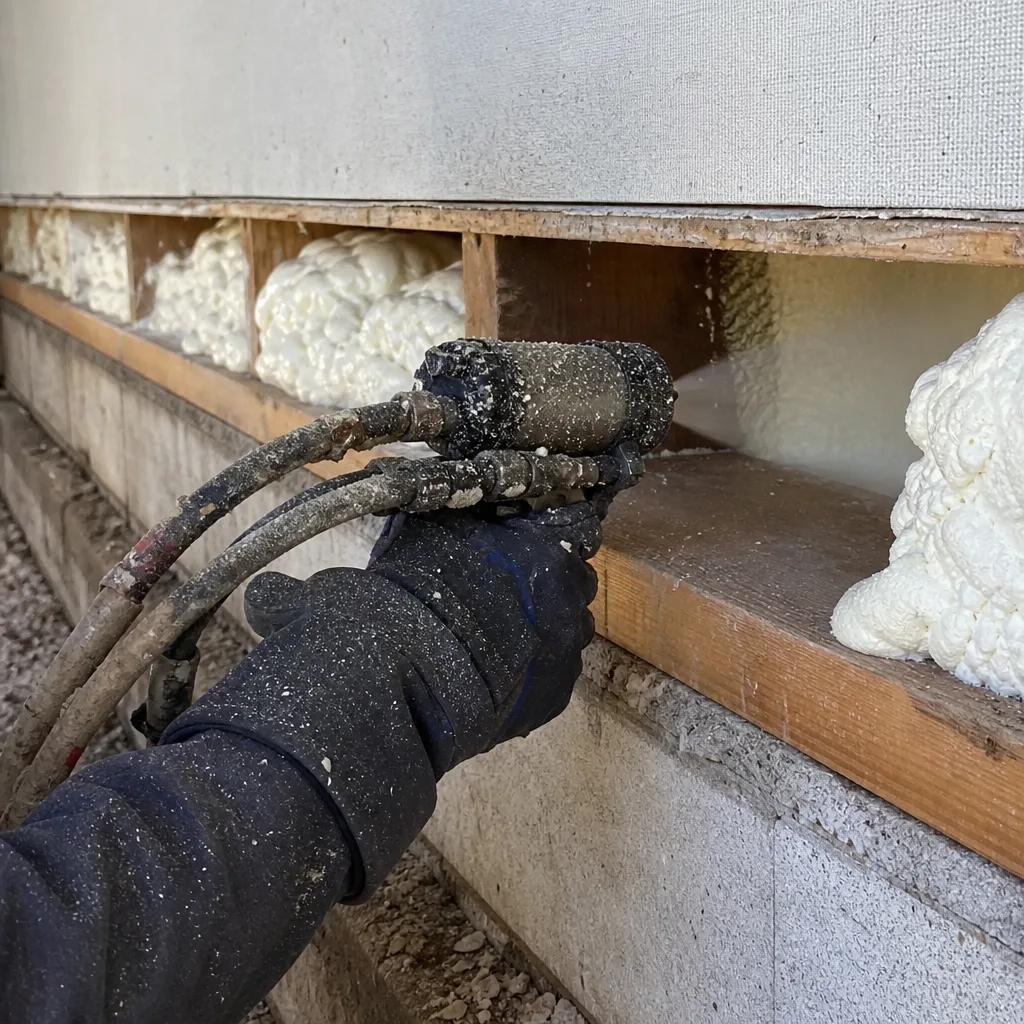
Spray foam earns its keep in Costa Mesa where air-sealing matters more than raw R-value. The persistent humidity and salt air off the Santa Ana River corridor mean open-cell and closed-cell options need to be matched to the assembly’s drying direction. We install both Icynene and Demilec product lines, so the recommendation is driven by the wall or roof cavity’s moisture profile, not by what we happen to stock. Vaulted ceilings and exposed rafter cavities around Mesa del Mar respond well to foam’s continuous air barrier.
Spray Foam Insulation in Costa Mesa
What happens when you call
- 1
A real person answersNo phone trees — you reach a local pro.
- 2
You get an upfront price rangeHonest numbers before anyone is dispatched.
- 3
A background-checked tech heads outLicensed & insured, dispatched right away.
- 4
You approve before work beginsNothing starts until you say go.
Blown In Insulation in Costa Mesa
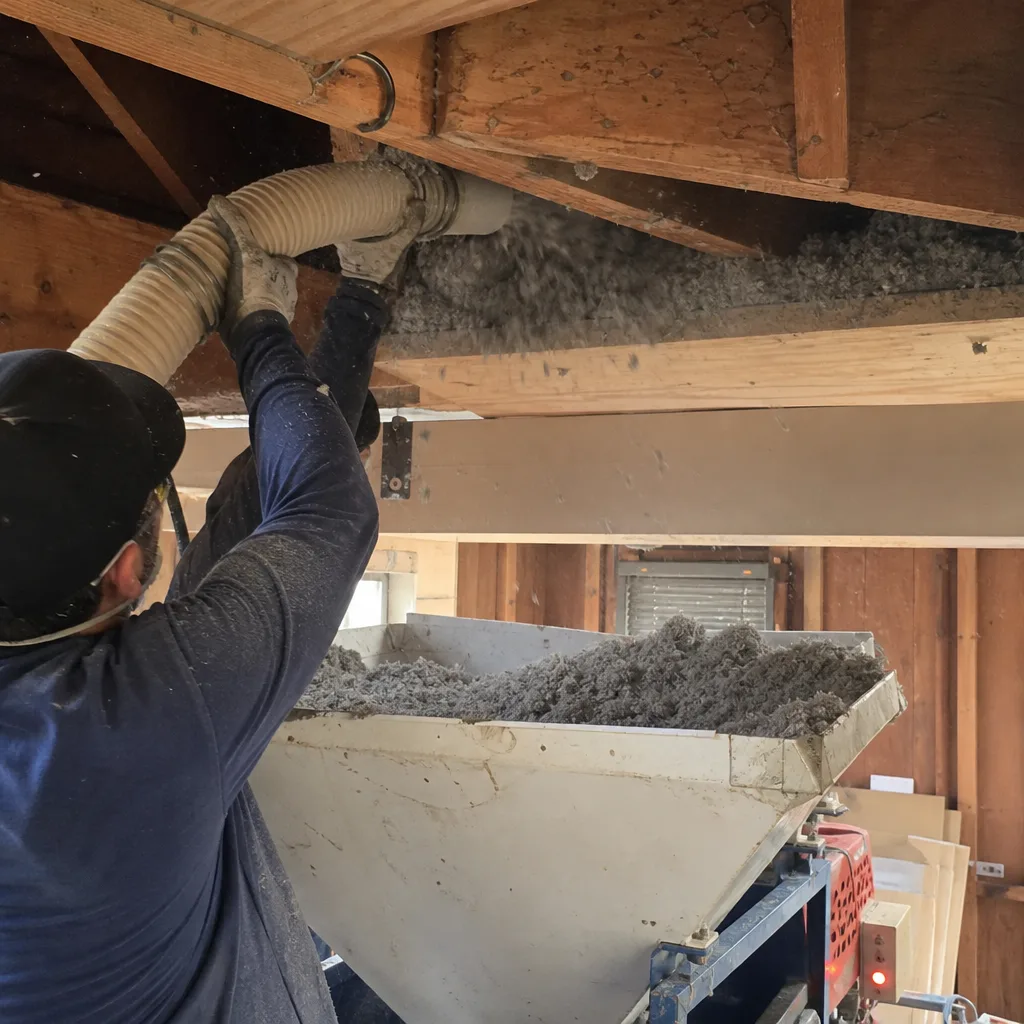
Blown in insulation is the most common request we field from Costa Mesa homeowners, especially in the 1950s-60s tracts where original R-11 batt has compressed, slumped, or been chewed up by rodents over decades of coastal humidity. Loose fill reaches the corners and odd cavities that batts leave open, making it a fast, effective fix for the leaky top plates and uneven ceiling coverage we see across Mesa del Mar and the Westside. For a closer look at the method, see our Blown In Insulation service hub.
Cellulose Insulation
Signs you need it
High summer cooling bills and rooms that never hold temperature despite the mild Costa Mesa climate often mean the existing batt has settled away from the top plate or was installed too thin from the start.
What it costs in Costa Mesa
Cellulose blown-in insulation typically runs $1.20 to $2.40 per square foot installed depending on depth and access.
How we do it
We air-seal penetrations, then blow GreenFiber cellulose to the target depth using hoses from the truck, checking density with a gauge to hit the specified R-value.
Blown In Attic Insulation
Signs you need it
Uneven attic coverage, dusty indoor air, or rooms directly under the roof deck that swing warm in the afternoon are common indicators in Costa Mesa’s stucco two-story homes.
What it costs in Costa Mesa
Blown in attic insulation in Costa Mesa lands between $1,800 and $3,600 for a typical 1,500-square-foot attic floor, depending on depth and prep.
How we do it
We prep the attic floor, seal bypasses around can lights and chases, then blow loose fill to a consistent depth across the full plane, including over exterior top plates.
What Blown In Insulation Costs in Costa Mesa
| Item | Typical range in Costa Mesa |
|---|---|
| Blown in attic insulation (1,500 sq ft attic floor) | $1,800 – $3,600 |
| Cellulose loose fill (per sq ft installed) | $1.20 – $2.40 |
| Fiberglass loose fill (per sq ft installed) | $1.10 – $2.20 |
Is blown in insulation worth it in Costa Mesa’s mild climate?
Yes. Costa Mesa’s marine layer keeps humidity high year-round, and air-sealing plus dense loose fill stops the moisture-driven heat loss and condensation that batts left unaddressed for decades. The comfort gain comes from stopping air movement, not just adding R-value. Call (844) 643-2736 for a free estimate.
How long does blown in insulation last in Costa Mesa homes?
Cellulose and fiberglass loose fill last 20 to 30 years here when the attic stays dry, but salt-laden coastal air means sealing penetrations first is essential to prevent moisture from shortening that lifespan. We inspect existing material before adding new. Call (844) 643-2736 for a free estimate.
Brands We Service in Costa Mesa
We install products from eight insulation manufacturers, but on Costa Mesa jobs we most often reach for Owens Corning or Johns Manville fiberglass, GreenFiber cellulose, and Demilec spray foam. Parts are stocked locally, so same-week scheduling for blown-in and batt work is normal. See our brands for the full range.
Pricing for Insulation Company in Costa Mesa, CA
| Service | Typical range in Costa Mesa |
|---|---|
| Blown in attic insulation (1,500 sq ft attic floor) | $1,800 – $3,600 |
| Cellulose loose fill (per sq ft installed) | $1.20 – $2.40 |
| Fiberglass loose fill (per sq ft installed) | $1.10 – $2.20 |
| Attic batt insulation (per sq ft installed) | $0.90 – $1.80 |
| Spray foam insulation (open-cell, per sq ft) | $1.50 – $3.50 |
| Spray foam insulation (closed-cell, per sq ft) | $2.50 – $5.50 |
| Air sealing (whole house) | $800 – $2,500 |
| Attic insulation removal and disposal | $1.50 – $3.00 per sq ft |
Prices in Costa Mesa move upward when vaulted ceilings limit access, when old batt needs removal first, or when moisture damage means extra air-sealing before new material goes in. We quote exact numbers before starting, so the price we agree on is the price you pay.
Neighborhoods We Serve in Costa Mesa
We work across all three Costa Mesa ZIP codes, with most of our blown-in and attic jobs concentrated in the older post-war tracts where homes still carry their original insulation. Response time for estimate requests in Costa Mesa is typically 1 to 2 business days.
- Westside Costa Mesa
- Mesa del Mar
- South Coast Metro
- Eastside Costa Mesa
- Mesa Verde
Service Area – Cities Near Costa Mesa
Stratford Insulation serves Costa Mesa and the surrounding coastal Orange County communities. If you’re in a neighboring city, we cover Newport Beach, CA, Fountain Valley, CA, Huntington Beach, CA, and San Joaquin Hills, CA with the same insulation-only focus and brand-backed product lines.
Serving Costa Mesa, CA — Our Local Coverage Area
We’re based in the Costa Mesa area and know this community well. Use the map below to see our service coverage — if you’re nearby, we can almost certainly help.
FAQs About Insulation Company in Costa Mesa
We typically schedule Costa Mesa estimates within 1 to 2 business days, and same-week installation is common for blown-in and batt jobs. Spray foam jobs may need a few extra days for material prep. Call (844) 643-2736 to check current availability.
Most Costa Mesa HOAs, particularly around South Coast Metro townhome communities, only require approval for exterior-visible changes. Attic and wall insulation work is interior and usually exempt, but we can provide scope documentation if your HOA asks. Check your CC&Rs to be sure.
Yes. We insulate single-room additions, small 1950s Westside attics, and full two-story stucco homes across 92626, 92627, and 92628. The approach changes with the construction era and rafter type, but the insulation-only focus stays the same. Call (844) 643-2736 for a free estimate.
What happens when you call
- 1A real person answersNo phone trees — talk to a local insulation pro.
- 2You get an upfront price rangeHonest numbers before anyone is dispatched. No surprises.
- 3A background-checked tech heads outLicensed & insured, typically within 1-hour.
- 4You approve before work beginsNothing starts until you say go.
What Costa Mesa Customers Say
"Installed baffles at the soffits so the new insulation didn't block the ventilation, which the previous contractor apparently never considered."
— Tracy Whitaker"Handled the utility rebate paperwork, which knocked a real amount off the final cost."
— Allison Hoffman"Spray foam in the rim joists in the basement. The cold floors above them are gone."
— Nisha Rao